
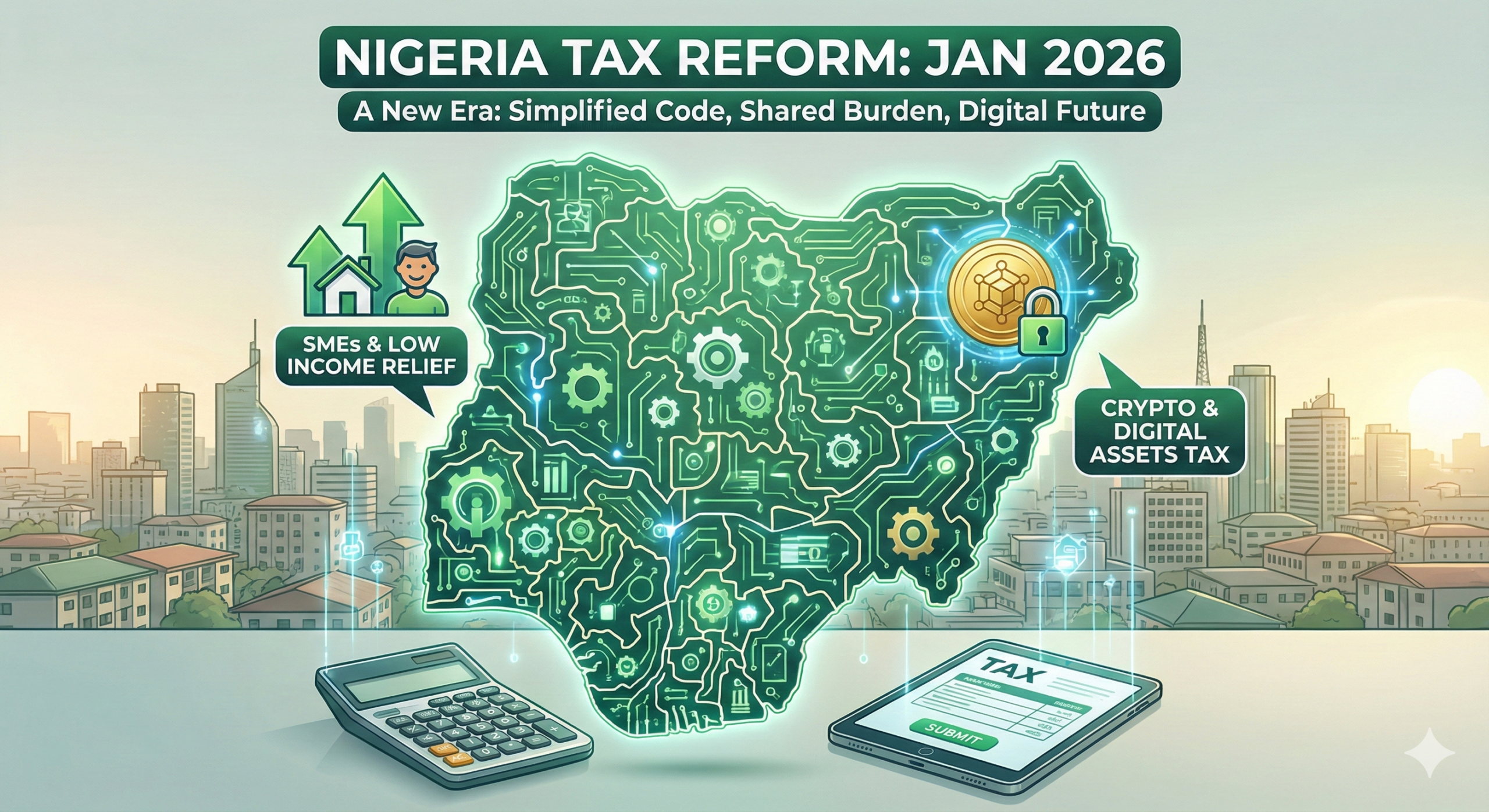
The Nigerian tax landscape has just undergone its most significant overhaul in decades. As of January 1, 2026, the full implementation of the new tax reform laws is officially underway, changing the rules for individuals, small businesses, and multinational corporations alike.
If you are wondering why your accountant is panicking or why the news is filled with debates about “VAT derivation,” this post is for you.
Here is a breakdown of the current tax reforms in Nigeria, what has changed, and how it affects your pocket.

The Big Picture: What Just Happened?
On June 26, 2025, President Bola Ahmed Tinubu signed four major bills into law, collectively known as the Tax Reform Acts. While some provisions took immediate effect, the complete rollout—including new compliance mandates and tax filing structures—began in earnest on January 1, 2026.
The four key laws are:
- The Nigeria Tax Act (NTA) 2025
- The Nigeria Tax Administration Act (NTAA) 2025
- The Nigeria Revenue Service (Establishment) Act (NRSA) 2025
- The Joint Revenue Board (Establishment) Act (JRBA) 2025
The Goal: To simplify the tax code (reducing dozens of taxes into a single “Nigeria Tax Act”), diversify revenue away from oil, and capture the digital economy.
The Winners: Who Benefits?
The reforms are not all about taking more money; there are significant reliefs designed to cushion the economy.
- Small Businesses (SMEs): This is the biggest win. Small companies with an annual turnover of ₦50 million or less are now exempt from Companies Income Tax (CIT). Previously, the threshold was lower. This is designed to let small businesses breathe and grow without the burden of corporate tax.
- Low-Income Earners: The new Personal Income Tax (PIT) regime is progressive. Individuals earning ₦800,000 or less per annum are now fully exempt from paying income tax.
- Essential Goods: The list of “zero-rated” VAT items has been expanded to include more essential goods (like basic food items, medical products, and educational materials). This means you shouldn’t pay VAT on these daily necessities.
The “Ouch” Parts: Who Pays More?
The government needs to fund the budget somehow, and these reforms close several loopholes.
- Crypto & Digital Assets: The party is over for tax-free crypto trading. The new laws explicitly introduce Capital Gains Tax on digital and virtual assets. If you are trading Bitcoin or NFTs, you now owe the government a cut of your profits.
- Multinationals: A new Minimum Effective Tax Rate (ETR) of 15% has been introduced for large multinational groups. This ensures that global giants cannot shift profits to avoid paying their fair share in Nigeria.
- Strict Compliance: The Nigeria Tax Administration Act unifies how taxes are collected. Expect tighter enforcement on Tax Identification Numbers (TINs). You will likely need a TIN for more transactions now, including opening bank accounts and government clearances.
The Controversy: Why the Heat?
You may have heard about the “Northern Governors’ Opposition.” This was a major sticking point during the bill’s passage.
The controversy centers on the VAT distribution model. The new laws proposed a “derivation-based” sharing formula—meaning states where VAT is collected get to keep more of it. Northern governors (and some analysts) argued this disadvantages less-industrialized states that consume goods but don’t necessarily manufacture them. While the bills passed, this debate on fiscal federalism is far from over and remains a sensitive political topic in 2026.
Summary Table: Old vs. New
| Feature | Old Regime | New Regime (2026) |
| Tax Laws | Fragmented (CITA, PITA, VATA separate) | Consolidated into Nigeria Tax Act |
| Small Biz Exemption | Lower threshold (₦25m turnover) | Increased to ₦50m turnover |
| Low Income Exemption | Minimum wage based | ₦800,000/year earnings exempt |
| Crypto/Digital Assets | Unclear/Untaxed | Capital Gains Tax applies |
| Tax Authority | FIRS (Federal Inland Revenue Service) | Nigeria Revenue Service (NRS) |

